Regional NSW · Solar + battery storage
A proposed solar farm and battery energy storage system for regional New South Wales.
Spring Creek Solar Farm is a utility-scale photovoltaic and battery storage project under development in regional New South Wales. The project will deliver firm, dispatchable renewable energy to the National Electricity Market while supporting the local economy and the state’s clean energy transition.

Indicative project specifications.
- Solar
- ~120 MW AC
- Storage
- 360 MW / 1440 MWh
- Land size
- ~293 ha
About
Aligned with the NSW Government’s clean energy roadmap.
New South Wales has committed to halving its emissions by 2030 and reaching net zero by 2050. Spring Creek Solar Farm has been planned to contribute to that transition by adding firm renewable capacity to the National Electricity Market and helping replace ageing thermal generation across the NSW grid.
The site has been selected for its solar resource, proximity to existing high-voltage transmission and compatibility with cleared agricultural land. Photovoltaic generation is paired with co-located battery storage so the project can dispatch energy when the grid needs it most — supporting both daytime demand and the evening peak.
Read the project overview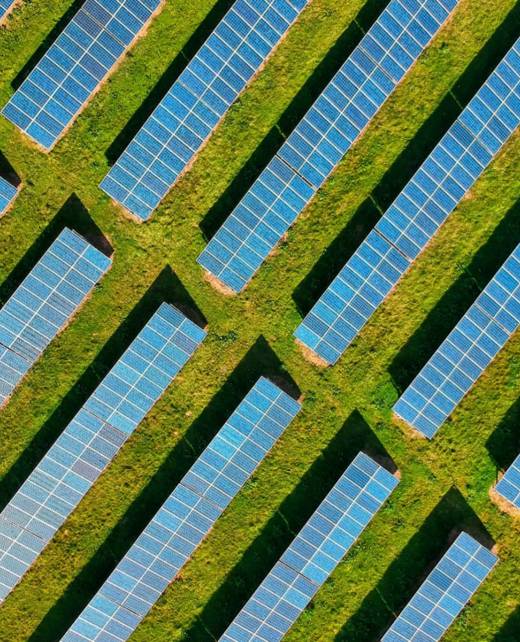
Generation
Single-axis tracking PV
Storage
Lithium-ion BESS
Region
Regional NSW
By the numbers
Indicative figures — subject to detailed design and approvals.
Built at the scale Australia’s grid needs.
The proposed project is sized to deliver around 330 GWh of renewable electricity per year — enough to offset the equivalent annual consumption of tens of thousands of NSW households.
- Solar generating capacity (AC)
- ~120 MW
- Battery storage capacity
- 360 MW / 1440 MWh
- Equivalent NSW homes powered annually
- ~60,000
- Land size
- ~293 ha
The project
Solar plus storage, designed for the grid of the next decade.
Spring Creek Solar Farm pairs large-scale photovoltaic generation with co-located battery storage to deliver firm, dispatchable renewable energy. Annual generation of approximately 330 GWh is expected — equivalent to powering around 60,000 NSW homes — while the BESS supports grid stability during the evening peak.
Utility-scale photovoltaic generation
Approximately 200,000 single-axis tracking PV modules designed to maximise yield across the regional NSW climate.
Co-located lithium-ion BESS
Around 1,440 MWh (360 MW) of battery storage with a four-hour duration, firming renewable output and dispatching into the evening peak.
Strategic transmission proximity
Sited within reach of existing high-voltage transmission infrastructure, minimising the need for new line construction.
Land-sensitive design
Layout planned on previously cleared grazing land, retaining vegetation corridors and supporting agrivoltaic co-use.
Local jobs during construction
An estimated 220+ direct construction roles, with regional sourcing prioritised through the build phase.
Heritage and biodiversity protection
Independent cultural-heritage and biodiversity assessments, with management plans co-developed with traditional owners.
Community
Building lasting value with the local community.
Spring Creek Solar Farm is committed to ongoing engagement with neighbours, traditional owners, local councils and regional businesses. The project includes a community benefit fund, local procurement commitments and direct engagement throughout planning, construction and operation.
- 01
Community benefit fund
A multi-year benefit fund directed to regional initiatives in education, environment and community infrastructure across regional New South Wales.
- 02
Local jobs and procurement
Around 220 construction roles with sourcing commitments for local contractors, plus apprenticeship and training pathways through the build.
- 03
Traditional owner partnership
Engagement and co-design with traditional owners on cultural-heritage assessment, site access and ongoing management arrangements.
- 04
Environment and biodiversity
Independent assessments to inform a biodiversity management plan, retention of vegetation corridors and active monitoring through operations.

Updates
Resources, announcements and consultation milestones.
- TBCResource
Project fact sheet
Overview of the project, indicative specifications, site context and timeline.
- TBCEvent
Community information session
Drop-in event for local residents and stakeholders — date, venue and registration to be announced.
- TBCResource
Project map
A3 project map showing the indicative site layout, infrastructure and surrounding area.
Contact
Talk to the project team.
Questions and feedback are welcomed from neighbours, community members, contractors and any stakeholders interested in the project. Reach out using the form opposite, by email, or by phone during Australian business hours.
- 1800 583 654
- Regional New South Wales, Australia